Proper alerting is a crucial feature in media monitoring systems, ensuring the quality of video streams and enhancing the user experience. Operators can quickly address potential issues by providing immediate notifications of potential issues before they escalate, minimizing any negative impact.
The first and most important aspect of alarming is the ability to be as close as possible to real-time. Consider a live sports event with a sudden surge in network traffic that affects your CDN performance. Without the ability to alarm in real-time, operators may remain unaware of the degradation in streaming performance, which can cause user devices to report buffering or freezing problems. Several users may have already been affected by that time, resulting in revenue loss and dissatisfied viewers. Real-time alerts enable operators to tackle such issues proactively, ensuring a seamless viewing experience and safeguarding revenue.
Similarly, in the event of a network outage, real-time alerting plays a vital role. Operators may take longer to resolve the outage without immediate awareness, leading to extended downtime. By promptly notifying operators, real-time alerts allow for quicker intervention, reducing downtime and potential financial losses.
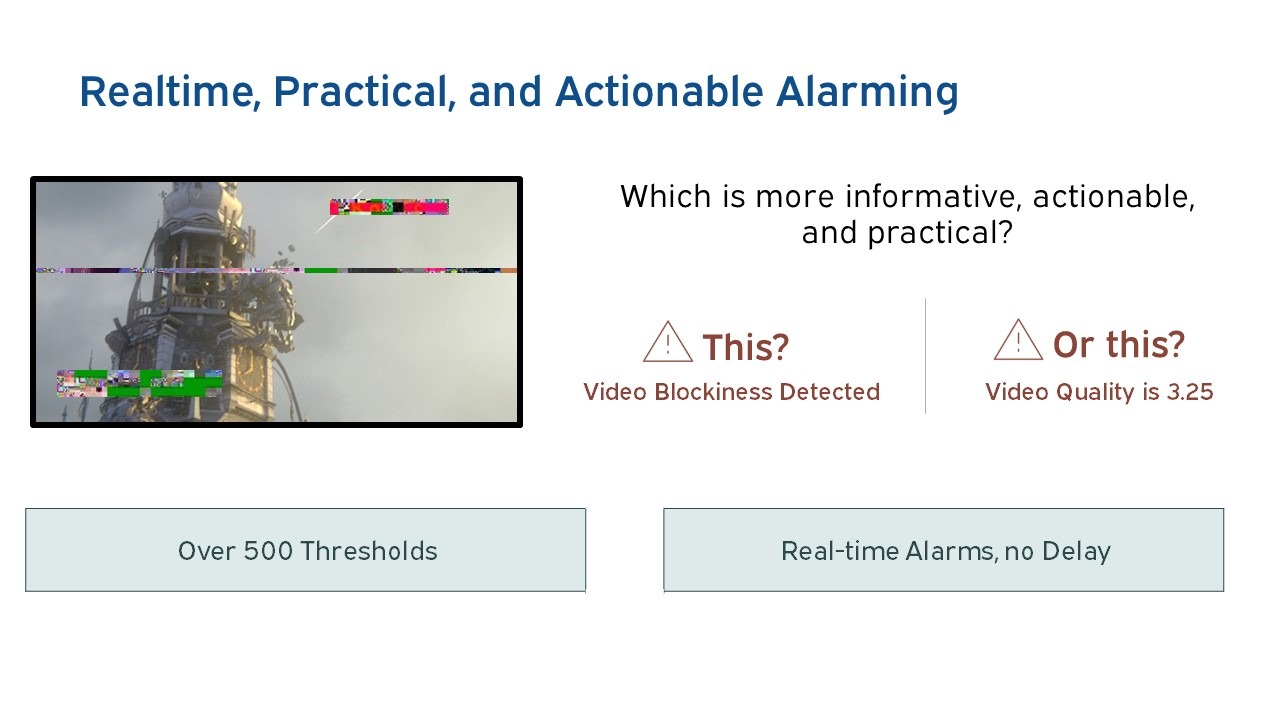
An effective media monitoring solution should also prioritize practical and actionable alerting. With huge amounts of data generated by video delivery networks, filtering non-critical events becomes crucial to prevent alert fatigue. An alarm should have the proper information about what, where, and why it happened, so it can help direct the operator to the source of the problem. Practicality can be achieved by giving more details about the cause of the alarm rather than giving a high-level summary of it. Operators must focus on resolving critical issues efficiently and not trying to interpret the alarm; accurate alerting helps achieve that.
As the media landscape evolves, monitoring systems provide intelligent insights, guiding operators toward the root causes of issues. Operators can maintain high-quality standards by adopting pragmatic and applied monitoring approaches while accommodating increased channels, resolutions, and bitrates in multiple locations.
Download our comprehensive guide, “The Insider’s Guide to Selecting Your Media Monitoring Solution” to unlock the full potential of real-time alerting and discover additional considerations for acquiring a media monitoring system for IP workflows.