Here’s a question to sit with before NAB: How many of your engineering team’s hours last quarter were spent managing infrastructure complexity versus actually improving your operations?
If the answer makes you uncomfortable, you’re not alone. The industry’s move from SDI to IP delivered real capability gains, but it also introduced a new category of cost that doesn’t show up cleanly on any budget line. It lives in the hours your engineers spend
- Managing PTP synchronization
- Troubleshooting packet loss
- Building bespoke cloud-to-ground bridges, and
- Commissioning workflows that take months to deploy.
That cost compounds every time you add a vendor, a site, or a live event to your plate.
SMPTE ST 2110 was a genuine leap forward for IP broadcasting. But it was designed for a specific kind of network, a lossless UDP fabric with nanosecond-precision timing, and that requirement doesn’t travel well. It doesn’t
- Move natively to the cloud.
- Scale without specialized infrastructure.
- Shrink your engineering overhead (if anything, it tends to grow it)
The industry has a term for what comes next: the Dynamic Media Facility, or DMF. And the transport layer that makes it real is called MXL, the Media Exchange Layer. TAG is actively building for both.
What MXL Actually Does (In Plain Language)
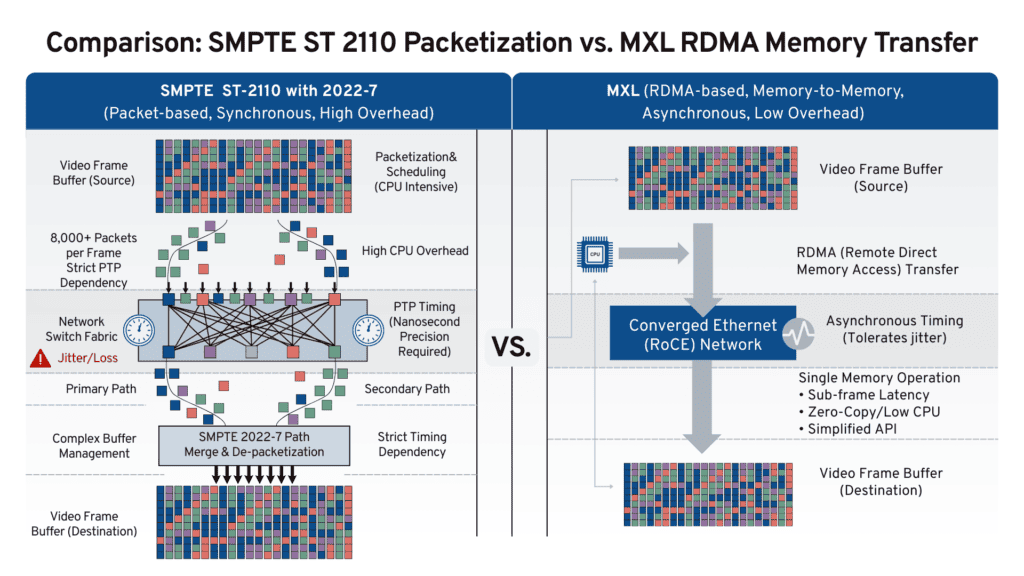
MXL replaces packet-by-packet video transport with something simpler: direct memory-to-memory transfer. Instead of assembling 8,000+ packets per frame with precise timing and managing their delivery across a specialized network, MXL treats a video frame the way your operating system treats any other chunk of data: move it from here to there, as fast as the network allows, without the ceremony.
The Business Case: What MXL Unlocks Operationally
The virtual facility model becomes a reality.
DMF will enable broadcasters to build studios that exist entirely in software, with control rooms that can produce sports in the evening, news in the morning, and a midday show in the afternoon, all from the same pool of compute resources. No fixed, equipment-heavy rooms. No infrastructure sitting dark between productions. Software-defined resources can be reallocated in real time, which means organizations can approach full utilization across workloads without buying capacity for peaks they’ll rarely hit.
CAPEX becomes OPEX, and OPEX becomes variable.
When your production infrastructure runs on standard compute rather than specialized hardware, you stop buying capacity you may never use. DMF enables a cost model where you pay for what you run, when you run it. Spinning up resources for a major live event and releasing them afterward is the architecture. For finance and operations leadership, that’s a meaningful shift in how production costs are structured and forecasted.
Your IT team becomes an asset, not a barrier.
ST 2110’s specialist requirements, like UDP fabric management, PTP domains, NMOS, have historically required broadcast engineers to develop IT skills that most IT departments don’t have and don’t want. MXL and DMF are built from an IT-centric viewpoint. RDMA and RoCE are standard IT services. Container-deployed applications on generic compute platforms are what IT does every day. By aligning broadcast infrastructure with how IT already works, DMF lets each team do what it’s best at.
Interoperability stops being a project.
MXL provides standardized interfaces that reduce the integration variables between system components. DMF supports the full AMWA NMOS suite for device discovery and connection management. Add a new vendor or a new workflow stage, and the connective tissue is already there. The system is designed to extend, not to resist.
What This Means for Monitoring and QC: TAG Use Cases
Workflows can become more dynamic. You can have services spinning up and down, streams traversing hybrid topologies, resources allocated on the fly. In this scenario, the operational visibility layer becomes more important, not less.
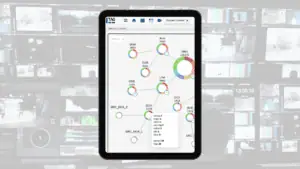
TAG Lens was built for exactly this environment. Lens provides visual service health analysis that lets your NOC team understand the state of your entire signal chain at a glance, cutting through alert noise to surface what actually matters. In a DMF-native production environment where dozens of software functions may be active at any given moment, Lens gives you the situational awareness to operate with confidence.
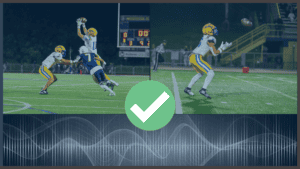
TAG QC Station extends that assurance to content quality, with automated color, audio, and metadata checks that work regardless of where in the workflow the signal originated or what path it traveled. These are capabilities that have traditionally required dedicated, expensive hardware and rigid signal routing. QC Station delivers the same standard of quality control in software, meaning it can run wherever your workload runs, without the fixed infrastructure costs. In a software-defined production chain, QC can’t be an afterthought. QC Station makes sure it isn’t.
Where TAG Stands Today in DMF and MXL
TAG has joined the MXL and DMF development committees and is currently participating in a live multi-vendor interoperability phase running on AWS, exchanging streams with participants including Grass Valley, Techex and Riedel. TAG’s MXL implementation is working, it’s being tested in a real interop environment, and it’s being built toward the customer-facing demonstrations you’ll see at NAB.
—
Come see TAG at NAB 2026, Booth W2323, West Hall. Let’s talk through what the DMF transition means for your specific operation.
Book your NAB meeting with TAG >> https://tagvs.com/events/nab-2026/

Michael Demb | VP Product Strategy | TAG Video Systems
Michael Demb is Vice President of Product Strategy at TAG Video Systems, turning broadcast challenges into practical products. With 20+ years in media technology, he brings a hands-on approach to helping customers adopt IP and software-defined workflows. Based in Toronto with his wife and three kids, he’s usually tackling DIY projects or skiing when he’s not working.