The disconnect
Your monitoring shows green across the board. Encoding rates are stable. CDN health looks good. But viewers tweet that your stream is buffering, your support team fields calls about wrong content showing up, and somehow people watching on cable are spoiling the game for your streaming audience.
Sound familiar?
Where is broadcasting’s monitoring gap?
Most broadcast operations monitor beautifully up to the CDN edge. You know exactly what’s happening in your facility, at your origin servers, across your distribution network.
But then the stream hits the chaos of consumer devices, say fifteen different smart TV models, streaming sticks with varying firmware, apps that behave differently on each platform, and you lose visibility. You’re hoping everything works, but you don’t actually know what viewers are seeing.
You can’t answer basic questions like:
- What latency are viewers experiencing?
- Is the right content reaching their devices?
- Which platforms are performing worst under load?
- Where do I start troubleshooting when complaints come in?
Closing the broadcast visibility gap with TAG and Witbe
This is where combining network-level monitoring with real-device testing changes things.
Instead of monitoring what you sent, you can see what viewers got.
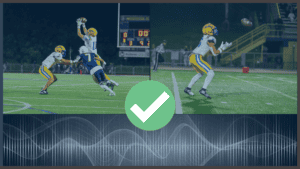
- TAG’s Content Matching compares your source feed against what’s actually playing on devices—measuring real latency and verifying content integrity frame-by-frame.
- Witbe tests on actual consumer hardware (the same Fire TVs and Samsung sets your viewers own), not just in a lab.
Together, they show you the complete picture: from your facility to someone’s living room.
What we learned testing latency during the 2025 Super Bowl
TAG and Witbe deployed this monitoring setup during Super Bowl LIX across major streaming platforms. A few things stood out:
The good news: Some OTT platforms (like Tubi on Fire TV) actually delivered faster than the cable feed we tested, by a few seconds. Low-latency streaming at scale is becoming real.
The reality check: Performance varied wildly by device. The same platform performed differently on Fire TV versus Samsung TV versus Apple TV. App implementations matter more than most operations realize.
The operational insight: During halftime, peak viewership, we caught loading failures on specific device/platform combinations before complaint volumes spiked. That’s the kind of heads-up that helps you mobilize the right team immediately instead of scrambling to figure out what’s broken.
What end-to-end visibility means for your workflow
If you’re running live streaming operations, end-to-end visibility helps you:
- Troubleshoot faster: When complaints come in, you know exactly which platform/device combo is having issues and where in the chain things broke.
- Set realistic expectations: You can tell your business team actual viewer latency numbers, not estimates. That matters for sports betting integrations, interactive features, or just managing viewer expectations.
- Prioritize device testing: If Samsung TV apps consistently underperform, you know where to focus your QA resources.
- Catch content errors: Wrong ad insertions, incorrect feeds, unexpected content switches, you’ll see them before your audience does (or at least understand what happened).
- Compare apples to apples: When evaluating CDN partners or encoding settings, measure actual viewer experience, not just technical specs.