Written by: Robert Erickson, VP Sales Americas, TAG Video Systems
Co-authored by: Paul Schiller, Product Marketing Manager, TAG Video Systems
Where It Started
The broadcast industry has long relied on on-premise SDI hardware as the cornerstone of production workflows. While dependable and capable, this technology required significant investment, consumed substantial energy, and often operated below capacity. As content demands grew, these inefficiencies became impossible to ignore.
The introduction of IP workflows represented a pivotal change. Standards like SMPTE ST2022-6 and later on SMPTE ST2110 removed the physical interface between systems, enabling broadcasters to virtualize resources. These changes allowed media to flow dynamically, laying the groundwork for more adaptable workflows. Yet, this was only the first step in a broader industry transformation.
The Transition Phase
As the industry adapted and technologies evolved, the focus shifted to removing physical hardware entirely. Moving workflows into software environments promised flexibility, but the early “lift-and-shift” attempts often fell short. Legacy software was moved into the cloud without optimization, resulting in high compute costs and inefficiencies. Meanwhile, some vendors continued relying on hardware-centric solutions, wrapping them in IP interfaces that added complexity but little innovation.
This phase also exposed a key challenge: the cost and bandwidth demands of uncompressed ST2110 workflows. While ST2110 remains the gold standard for on-premise production due to its quality and reliability, it can be prohibitively expensive for some broadcasters. As an alternative, compressed workflows, offer a path to high quality without the same bandwidth burden. These solutions are increasingly relevant for organizations seeking cost-effective options, particularly in hybrid environments.
Where We Are Now
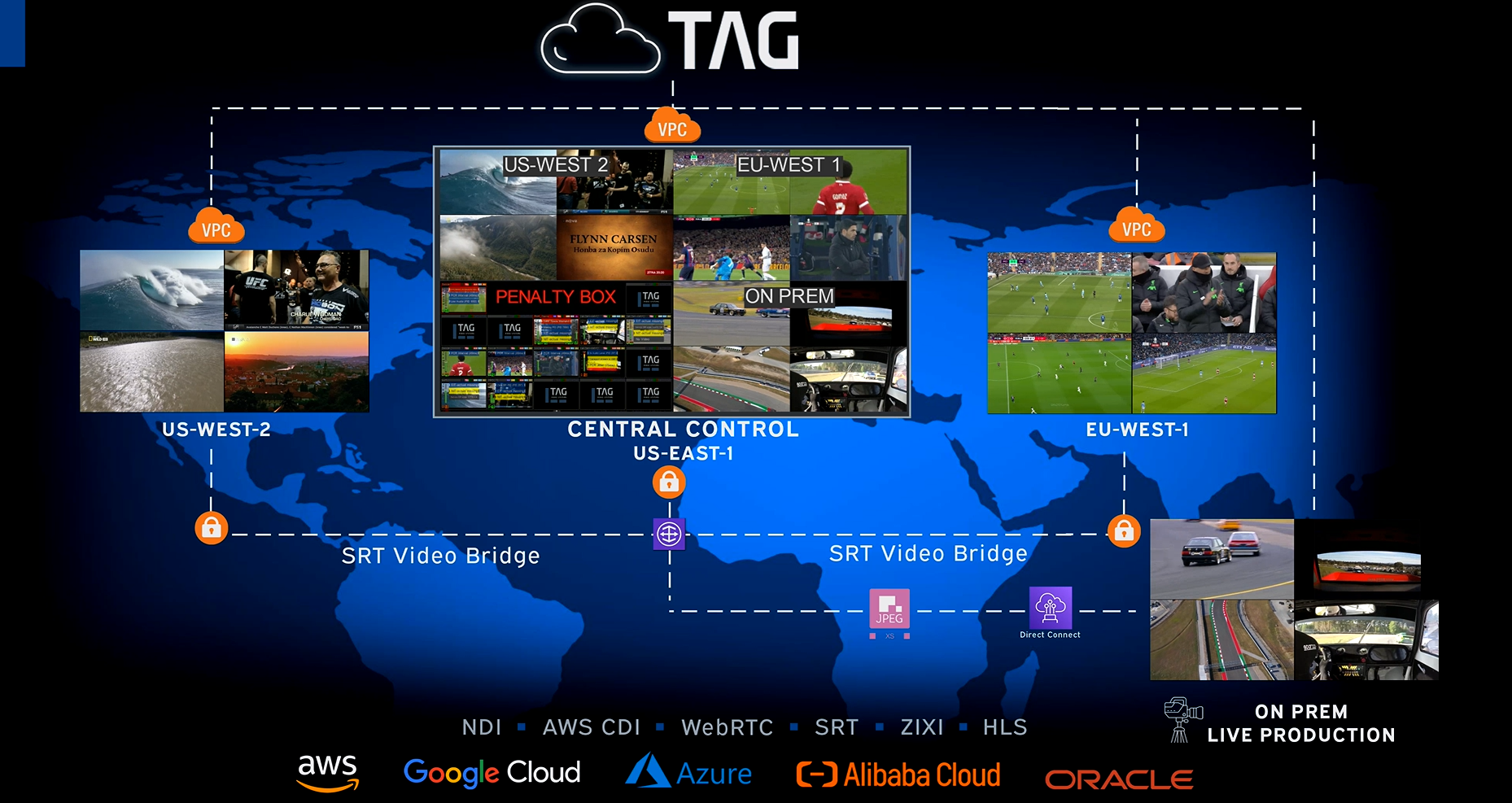
Today, the broadcast industry is embracing flexibility as its guiding principle. The idea of a single, universal standard dominating workflows is fading. Instead, broadcasters are gravitating toward ecosystems that support multiple codecs and transport methods, tailored to specific operational needs.
For example, a broadcaster focused on live production might prioritize ST2110 or JPEG-XS for their low latency and high quality. The key is to enable workflows that allow customers to mix and match technologies based on their unique requirements.
This shift underscores the need for broadcasters to evaluate their investments carefully. Hardware or software solutions should not only meet today’s demands but also adapt to the evolving ecosystem of codecs and transports. By prioritizing modular and scalable architectures, broadcasters can future-proof their workflows while remaining agile.
A Simple and Straightforward Approach
To navigate this landscape effectively, simplicity is paramount. Broadcasters need solutions that minimize complexity, embrace open standards, and allow them to create workflows without being locked into proprietary ecosystems. Modular designs enable engineers to build efficient, adaptable workflows using tools from different vendors.
This straightforward approach reduces friction, allowing teams to focus on their core tasks. Whether managing live sports or handling OTT playout, workflows should align with operational needs rather than forcing organizations into rigid models.
Looking Ahead
The transition from SDI to IP workflows and hybrid environments is a work in progress. While 60% of the industry remains reliant on SDI, the future lies in software-native, codec-agnostic solutions that adapt to diverse use cases. Broadcasters must prepare for an environment where flexibility and customization define success.
TAG Video Systems is already at the forefront of this transformation. By offering an IP-native platform that supports hybrid workflows and a wide array of codecs and transport methods, TAG ensures broadcasters are equipped for the challenges and opportunities of tomorrow. The shift to a dynamic, modular ecosystem is no longer a question of “if” but “when”—and broadcasters who embrace this approach will be ready to lead the industry forward.

Robert Erickson
VP Sales Americas

Paul Schiller