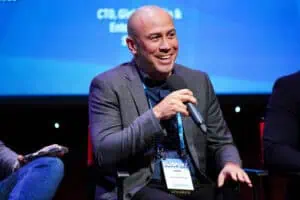
Writing year-end wraps can sometimes feel like assembling IKEA furniture (or a Lego set, for that matter). You know all the pieces matter, but fitting them together into something meaningful? That’s the challenge.
So instead of the typical “we’re proud to announce our achievements” routine, I want to tell you about what our customers achieved in 2025. Because this year was a good reminder that technology is only as good as what it enables someone to do.
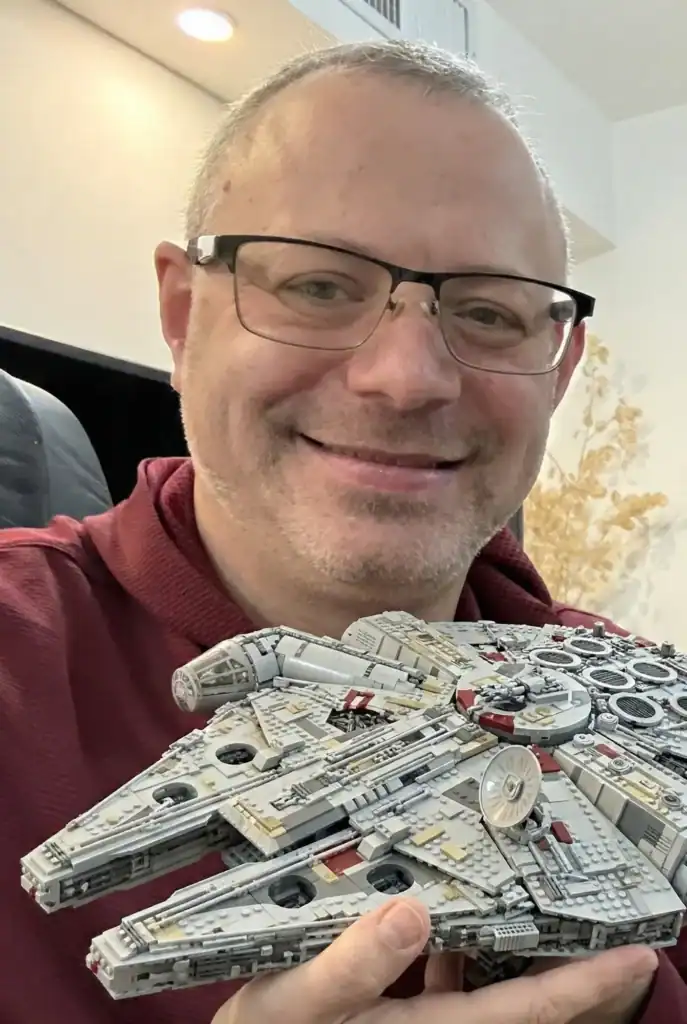
The Live Event that Could't Afford to Fail
Creative Technology came to us with a problem that keeps broadcast engineers up at night. They were handling massive live events – the kind where millions of people are watching and there’s zero room for “oops, let’s try that again.”
Their team needed to see everything happening across their infrastructure in real-time. Not five minutes ago. Not “we’ll generate a report.” Right now.
We worked with them to engineer a solution that gave their operators confidence, the kind of confidence where you can actually breathe during a show instead of white-knuckling through it.
When FIFA Calls
DAZN needed to deliver the FIFA Club World Cup 2025. Just a casual global sporting event watched by over 2.5 billion people.
The technical complexity here was about ensuring quality, monitoring multiple feeds, and making sure that when Messi scores (or whoever your favorite player is), viewers around the world see it perfectly. Not buffering, not pixelated, just there.
Their approach to solving this shows what happens when you take broadcast monitoring seriously. Not as a checkbox, but as the foundation of viewer experience.

The Studio That Streams to 90+ Countries
Corrivium Media handles something wild: they’re streaming live content to over 90 countries simultaneously.
What impressed me about their setup is how they turned monitoring from a reactive “oh no, something’s wrong” situation into a proactive “we see it, we’ve already fixed it” system. Their story is a masterclass in operational excellence.
When a Newsroom Goes All-In on IP
ITN Productions had a decision to make: Stick with what’s familiar or take the leap into a full IP control room.
They went all-in. Working with TAG, Techex and Matrox Video, they built a low-latency IP control room that handles the kind of fast-turnaround news content where seconds actually matter.
What makes this interesting isn’t just the technology stack. They now have faster workflows, more flexibility, and the ability to respond to breaking news without your infrastructure fighting you every step of the way.
The full setup shows what can happen when you stop treating IP transition as a “someday” project and commit to it.

The Feature That Changed Workflow
We launched comprehensive real-time stream analytics with TAG QC Station this year.
What this does is simple: it helps you catch problems before your viewers do. It gives you the set of tools and data you need to make decisions now, not after you’ve already lost audience.
If you’re an engineer who’s tired of playing detective after an incident, this is basically your new best friend.
Recognition in 2025
Speaking of QC Station, the feature had a standout year in 2025, earning Best of Show awards from both TV Tech (NAB) and TVBEurope (IBC), plus NAB Show Product of the Year.
We also won multiple awards in APAC this year for innovation and operational excellence. It’s good validation that we’re heading in the right direction.
What 2026 Looks Like From Here
I’m not going to make predictions about where the industry is headed (I did contribute to IABM’s comprehensive report, which you can find here.)
What I will say is this: the gap between “we can technically do this” and “we can reliably deliver this to millions of people” is where the real work happens.
That’s where we’re focused. Not on buzzwords. Not on feature lists that look good in PowerPoint. On the things that make your job easier and your streams more reliable.
If you’re dealing with live broadcast challenges whether it’s monitoring, quality control, or just trying to sleep better at night knowing your infrastructure won’t surprise you, let’s talk. Not in a “schedule a demo” way, but in a “here’s what we’re actually seeing in the field and maybe we can help” way.
Reach out anytime. I mean it.
Michael
michael.demb@tagvs.com
FAQs
TAG detects over 500 distinct event types across all stream layers and formats, but effective alerting at scale isn't about volume, it's about filtering out noise and delivering actionable information.
TAG's system provides real-time alerts (not delayed reports) with specific details about what happened, where it happened, and why, helping operators identify root causes immediately.
You can customize thresholds per stream and choose notification methods (multiviewer overlay, email, SNMP, syslog), preventing alert fatigue while ensuring critical issues get immediate attention.
For complex workflows spanning multiple formats and locations, TAG's unified monitoring approach means you're not juggling multiple diagnostic tools or fragmented systems.
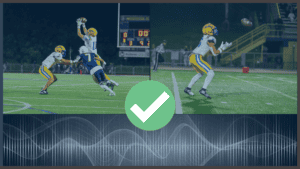
TAG's Content Matching technology creates a unique fingerprint for every video frame and audio envelope, letting you compare streams across any two points in your workflow, regardless of resolution, bitrate, or framerate. This automates verification that's impossible to do manually at scale.
You can measure frame-accurate latency across distribution paths, validate affiliate feeds, confirm SCTE-35/104 ad triggers are firing correctly, detect A/V drift, and pinpoint exactly where content inconsistencies occur.
By reducing "eyes on glass" and automating these checks, Content Matching gives you confidence that every piece of content is delivered correctly without needing operators to manually monitor hundreds of feeds.
QC Station integrates engineering-grade measurement tools directly into your multiviewer, giving you continuous visibility of critical metrics alongside live video. Instead of threshold-based alarms that only alert you after something crosses a line, QC Station provides real-time scope-like functionality for luminance, chrominance, waveforms, vectorscopes, and audio loudness (ITU-R BS.1770-4 and EBU R128 compliant).
You can see quality degrading as it happens, before it impacts viewers, and the system outputs detailed metrics via API, Redis, and SNMP for historical trend analysis in tools like Grafana and Kibana. This means faster troubleshooting and the ability to address issues proactively rather than reactively.

Michael Demb | VP Product Strategy | TAG Video Systems
Michael Demb is Vice President of Product Strategy at TAG Video Systems, turning broadcast challenges into practical products. With 20+ years in media technology, he brings a hands-on approach to helping customers adopt IP and software-defined workflows. Based in Toronto with his wife and three kids, he’s usually tackling DIY projects or skiing when he’s not working.