Where Broadcast Cloud Migrations Break Down
The assumption going into most cloud migrations is that the hard part is technical. In practice, the technical challenges are usually solvable. The organizational ones are where projects stall or fail.
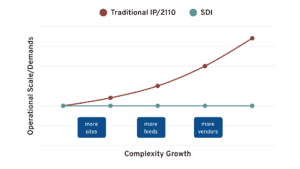
A major sports broadcaster invested significant capital migrating playout to cloud. The approach was a straight lift-and-shift, their existing SDI-based workflow replicated in cloud exactly, including every workaround, redundancy layer, and manual handoff. Six months later, costs were higher than on-premises and no new capabilities had been gained.
The technology worked. The organizational model it was built around didn’t translate.
This pattern is common enough across POC engagements to be worth addressing directly before any technical evaluation begins.
What Do Successful Broadcast Cloud Migrations Have in Common?
Cross-functional involvement from the start. Organizations that succeed typically form teams that include technology, operations, business, and content stakeholders before vendor conversations begin. Not sequentially, not “IT handles the technical scope, then hands it over”, but together, from the initial scoping phase.
Organizational risk assessed before technical risk. The questions that often determine project outcomes are about ownership and decision authority: Who controls the budget? Who approves changes to live workflows? What’s the escalation path when something goes wrong on air? These need answers before an RFP is written.
POCs run against specific, defined success criteria. Technical validation, operational readiness, and cost accuracy should each have pass/fail thresholds established in advance. A POC structured around “let’s see if it works” produces ambiguous results. One structured around specific metrics produces data that can support a real decision.
How vendor demos can accelerate better cloud broadcast decisions
Vendor demonstrations are a valuable first step in the evaluation process. They provide a controlled environment to showcase product capabilities and help teams quickly understand potential functionality, workflows, and architecture patterns.
However, their greatest value is realized when they are used as the starting point for deeper validation rather than the endpoint of evaluation.
A structured RFI/RFP/POC process builds on this foundation by translating demo concepts into real operational conditions. This is where organizations align technology capabilities with actual production requirements, including integration with legacy systems, edge cases, and real-world workload behavior.
This progression is important because it means that the PoC environment reflects production reality. It allows teams to validate performance, scalability, and operational fit under real constraints.
In this context, the PoC becomes not a risk checkpoint, but a discovery phase, where assumptions are validated early, and architectures are refined before production rollout.
The goal is to ensure that when real workloads go live, the environment behaves as expected, and surprises are handled during design and testing, not after deployment.
How Cost Visibility Changes the Migration Conversation
One of the more significant differences between cloud and on-premises infrastructure is cost transparency. On-premises costs are largely fixed and opaque: they appear in capital budgets and depreciation schedules (not in real-time dashboards).
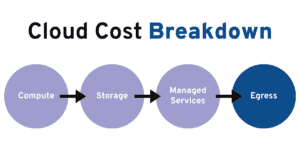
Cloud costs are visible at the resource level, in real time: compute usage, storage consumption, data transfer, and their associated costs, updating as the workload runs.
Involving finance stakeholders in POC monitoring, not as approvers after the fact, but as active participants watching the cost dashboard during testing, tends to shift the conversation from budget approval to architecture decisions. That’s a more productive place to be, and it’s harder to get to if finance is brought in only at the end.
How to Structure a Broadcast Cloud Migration POC
A practical starting framework:
- Select the lowest-risk workflow as the initial POC scope. Something bounded, where failure during testing has limited operational impact
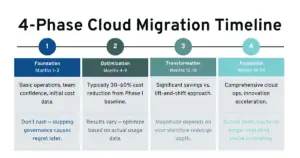
- Allow several months for the full process, including vendor evaluation
- Involve finance from the beginning as participants in the process
- Define success criteria before testing begins: technical validation thresholds, operational readiness indicators, and cost accuracy targets.
- Scale what the POC validates rather than extrapolating from incomplete data.
The sequence matters. Organizations that define success criteria after running the POC tend to interpret results to fit a decision already made.

Golan Simani | Director of Cloud and Technical Operations | TAG Video Systems
Golan Simani is Director of Cloud and Tech Operations at TAG Video Systems, where he leads product development on AWS, Azure, and GCP, manages technical account relationships with tier 1 broadcasters, and guides organizations through cloud migration POCs and RFP processes.